Hotel Spotlight: Shangri-La Kowloon, Hong Kong
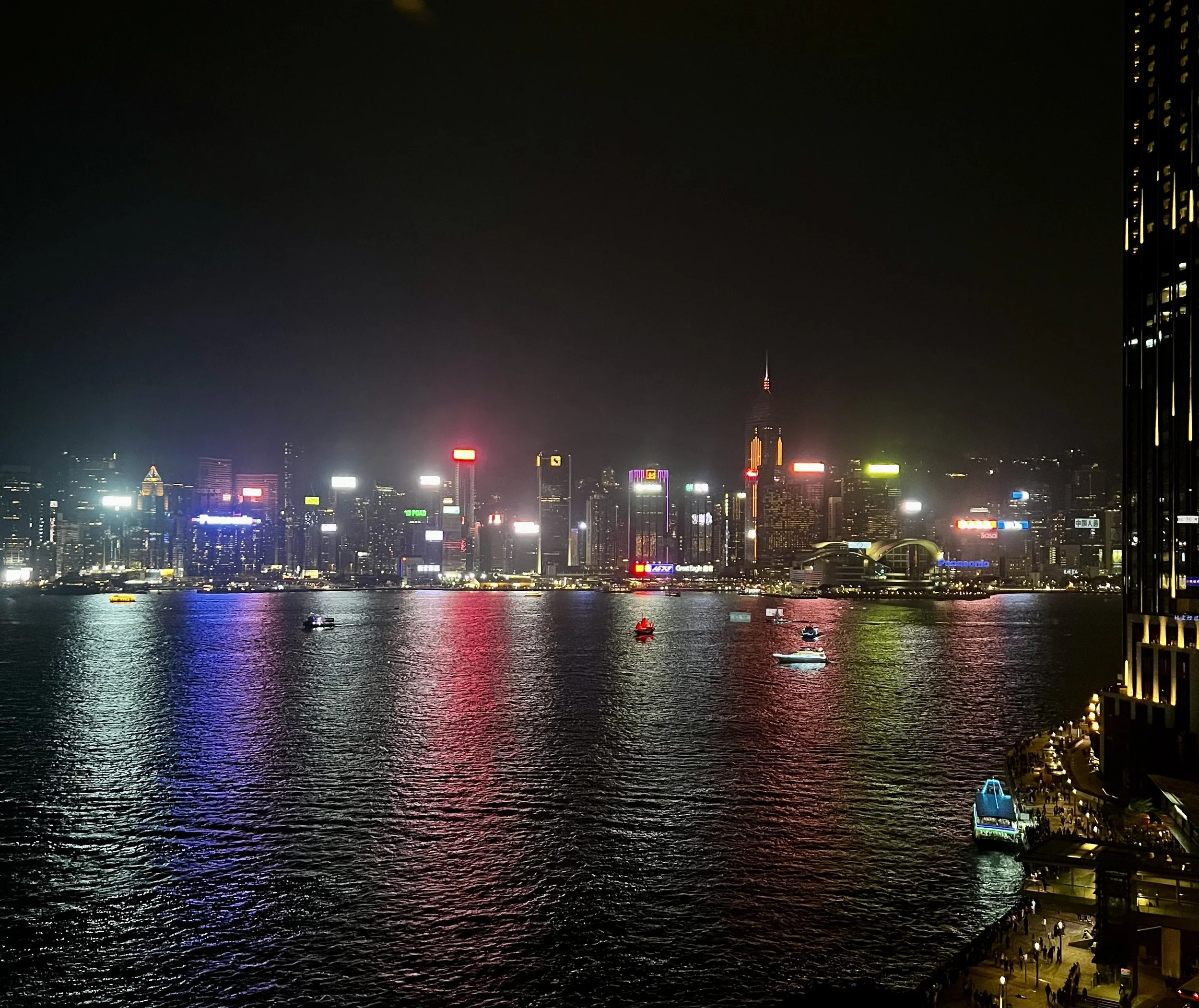
A view of Victoria Harbour from the Shangri-La Kowloon
Hotel Spotlight: Shangri-La Kowloon, Hong Kong
The first thing to say about Shangri-La Kowloon is that the view is the experience.
This is not a criticism. Some hotels exist primarily for what happens within their walls. Others exist as platforms for what happens outside them. Shangri-La Kowloon is firmly in the second category, and once that framing is in place, almost everything else about the property begins to make sense.
The property looks directly across Victoria Harbour at one of the most photographed skylines on earth. The view runs the length of the harbour, takes in Central, the IFC, the Bank of China Tower, and the entire choreographed light show of the Hong Kong waterfront that appears after dusk. There are very few hotel windows in the world that show this much.
The harbour-view rooms
The property is large, with several categories. The two-tier decision is binary: harbour view, or not.
Harbour-view rooms — and specifically the Deluxe Harbour categories upward — deliver the experience the hotel is built to provide. City-view rooms, despite being well-appointed, do not. For most travellers paying Shangri-La Kowloon rates, the harbour-view category is the only category worth booking. The premium reflects this, and is generally justified.
Within the harbour-view categories, rooms are spacious by Hong Kong standards (which sets a low bar — even the entry-level harbour rooms feel generous compared to most international rooms in the city). Layouts prioritise the window. Furniture is arranged so that an evening in the room becomes, at sunset, more compelling than most things one could be doing in the city itself.
The window is not a frame. It is the room's central activity.
The Horizon Club
The hotel's executive lounge — the Horizon Club — is one of the property's strongest features for travellers who use lounges meaningfully.
The lounge sits high in the building with the same harbour view. Service is attentive and quietly competent. Continental food service runs across the day with afternoon tea and evening canapés that are, by lounge standards, well-executed. For business travellers, the workspace function is genuinely usable. For leisure travellers, it serves as a calmer sister to the main lobby, with the view unencumbered.
Booking into a Horizon Club category is, for travellers who actually use lounge facilities, often more valuable than several extra room categories of upgrade.
The hotel's classical register
Shangri-La Kowloon is not a contemporary hotel.
The interior design language is traditional, showcasing a five-star vocabulary of marble, polished wood, chandeliers, classical floral arrangements, and the formal cadence of Asian luxury hospitality from the latter half of the twentieth century. Some of it is dated by current design standards. None of it is unkempt.
The atmosphere this produces is composed and slightly old-world. The clientele skews accordingly with established business travellers, multi-generational families, leisure travellers drawn to traditional grand-hotel comfort rather than design-led experimentation. There is a particular pleasure in this register, especially for travellers who came of age in it. It is not, however, the property to choose for anyone seeking design as the primary luxury currency.
Service
The service style matches the design register: formal, warm, attentive, classical.
Staff retention at the property is visibly high, which translates into the small attentive gestures — a doorman who remembers your name on day three, a concierge who answers a question with an unexpected and useful piece of context — that distinguish hotels with strong service culture from those without. This is one of those hotels.
For travellers used to more casual contemporary service, the formality may take time to adjust to. After that, most appreciate the precision.
The location
Tsim Sha Tsui is a strong location for first or second-time Hong Kong visitors.
The hotel is within walking distance of the Star Ferry, the harbour-front promenade, the Hong Kong Museum of Art, and the Tsim Sha Tsui MTR station. Crossing to Hong Kong Island is straightforward by ferry or rail. The Airport Express to Kowloon Station, plus a short taxi, is the smoothest airport transfer route — a meaningfully better option than driving in either direction.
For business travellers, the location is well-positioned for meetings on either side of the harbour. For leisure travellers, it places the strongest views and the most photographable parts of the city directly outside the front door.
Where the property is — and is not — the right choice
Shangri-La Kowloon is the right choice for travellers who want the Hong Kong skyline as part of their daily experience. It is the right choice for travellers who appreciate traditional luxury hospitality. It is a strong choice for business travellers and for first-time leisure visitors.
It is not the right choice for travellers who weigh contemporary design heavily, who want a more boutique scale, or who prefer Hong Kong Island's central energy to Kowloon's slightly slower edge.
The closing observation
What stays with most guests after a Shangri-La Kowloon stay is not a service moment, an architectural detail, or a particular meal. It is the view from the room — and specifically the view at night, with the city's light show running, and the harbour traffic moving, and the room dim enough that the window does the work.
There are very few urban hotel views that match it. For travellers willing to organise a stay around that view, the property delivers it more reliably than almost any alternative.
For travellers prioritising the harbour view in a Hong Kong stay, Shangri-La Kowloon remains the strongest single choice. We are happy to advise on category selection and how the property fits into a broader Asia itinerary.