Mérida: Mexico's Most Underrated Design Destination
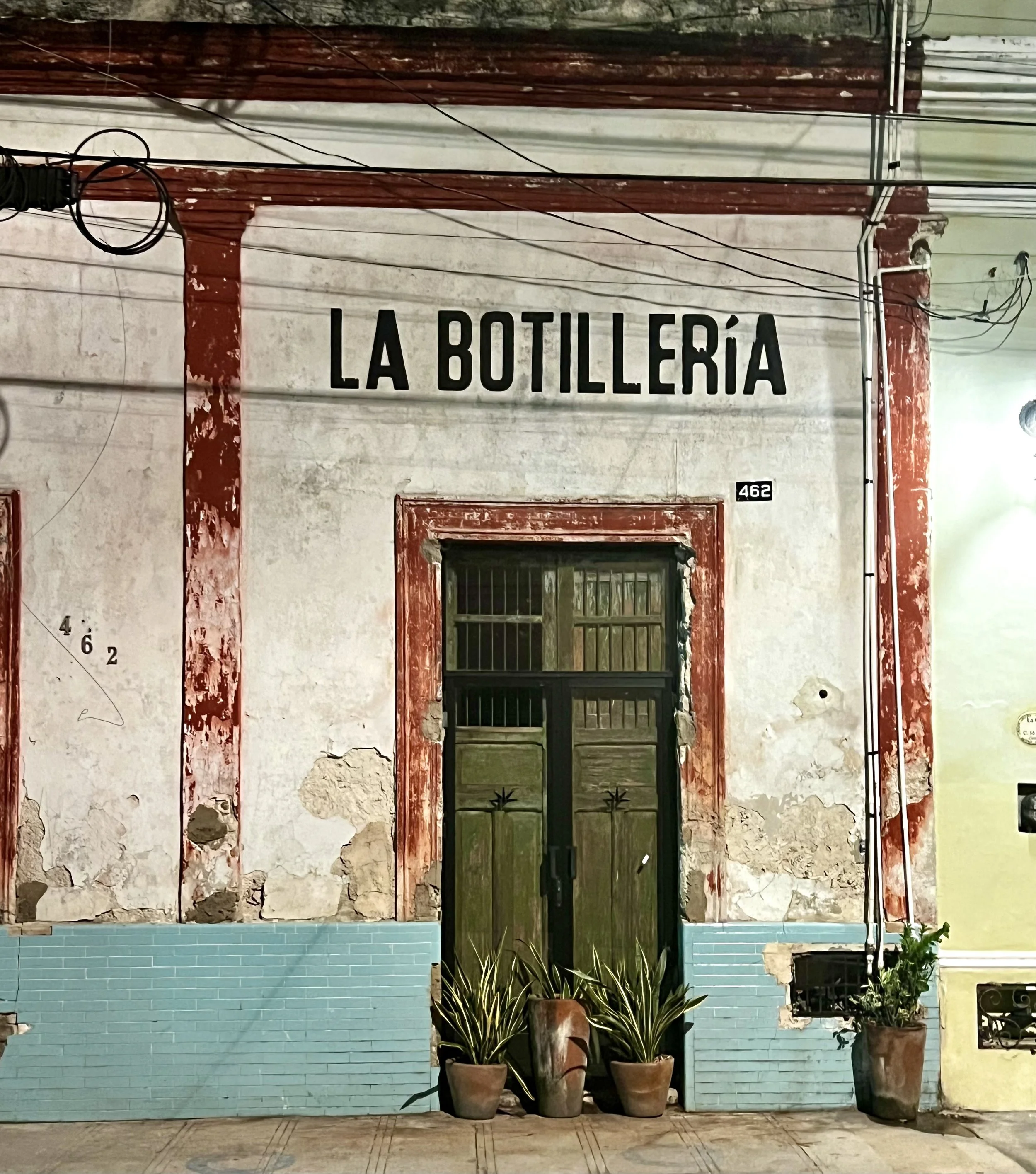
La Botillería, Centro Histórico. The facade gives almost nothing away — which is precisely the point.
Mérida does not announce itself.
A first walk through the centre often leaves visitors slightly puzzled. The streets are low-rise. The colours, while rich, are not theatrical. There is no cathedral square that resolves the city's identity in one image. For travellers arriving with the expectation of an obvious tourist set-piece, Mérida's first hour can register as quiet to the point of underwhelming.
Then a doorway opens, and the city begins its real work.
The art of the disguised interior
Mérida's defining architectural pleasure is concealment.
Unassuming colonial façades — sometimes weathered, often modest — open onto interiors of striking depth. Restored courtyards with mature trees. Galleried walkways framing pools and gardens. Contemporary furniture set within nineteenth-century stonework, lit by natural light from above. The transition from street to interior is, in the better properties, one of the most pleasurable sensations the city offers.
This pattern extends well beyond visitor-facing buildings. Private homes follow the same logic. Restaurants. Boutiques. The local design vocabulary treats the street-facing wall as a threshold to be passed through, not a façade to be decorated. What is for show waits inside.
A colonial city that did not stop being one
Mérida's architectural identity is grounded in the henequen-fibre wealth of the nineteenth century, which produced the long, tree-lined Paseo de Montejo and a stock of grand mansions that have, in recent decades, been steadily restored. The city centre runs on a regular grid of low buildings in restrained colours — terracotta, ochre, occasional deep blue, the off-white of limestone.
There are echoes here of Cartagena, of Havana, of Trinidad de Cuba. Mérida is recognisably part of that family of colonial cities, but the resemblance ends at the broad strokes. The Yucatecan version has its own pace, its own decoration, its own cuisine, and a strong Mayan undercurrent that the Caribbean cities do not share.
Boutique hospitality is the format
Mérida's accommodation landscape is dominated by small properties.
International chain hotels exist, but they are almost beside the point. The native format is the boutique restoration — fifteen rooms or fewer, often within a colonial-era building, run independently and with strong design sensibility. Service tends toward the personal rather than procedural. Luxury is expressed in atmosphere, restraint, and attentiveness rather than scale.
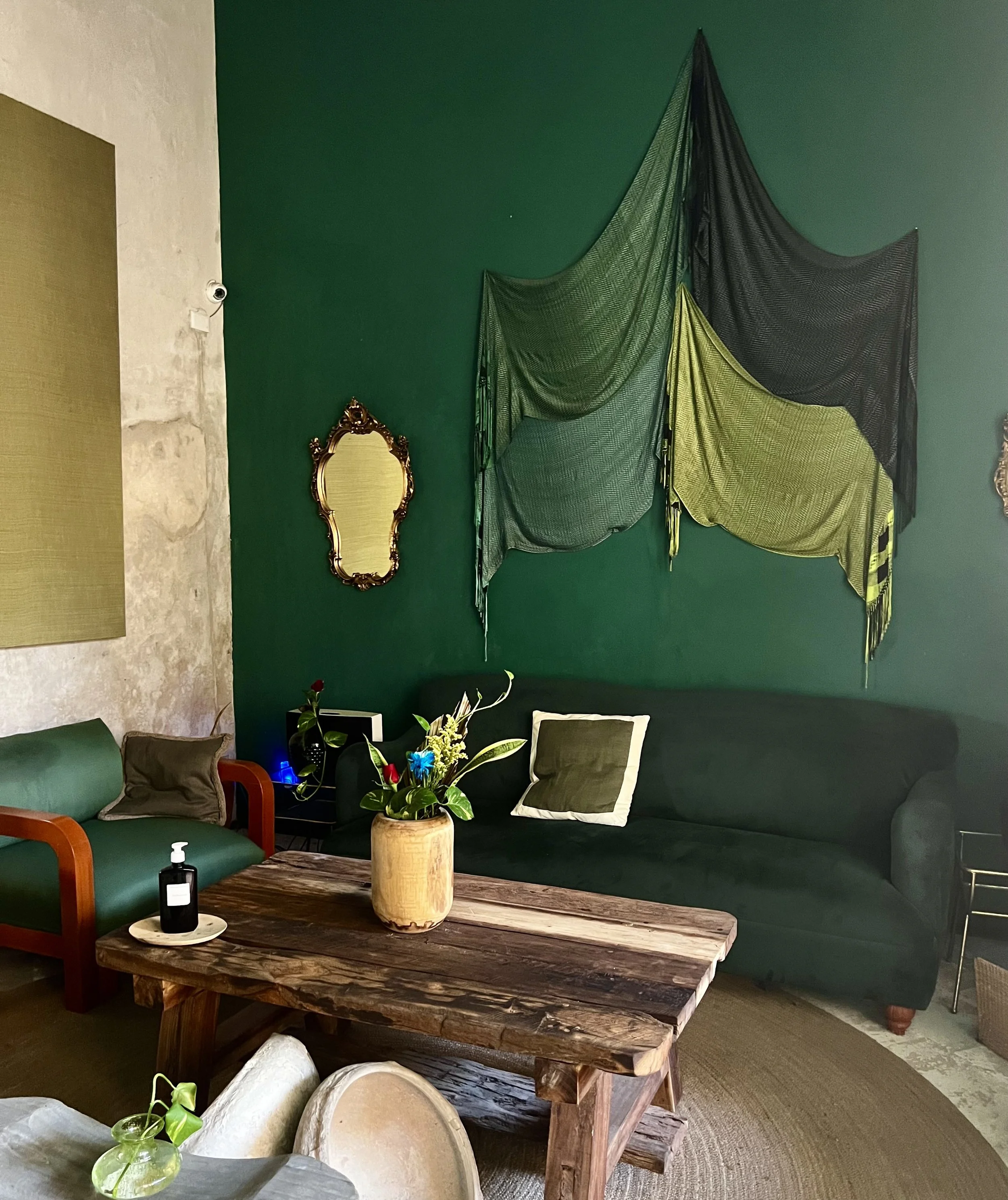
Ya'ax Hotel Boutique is a representative example. The name comes from the Mayan ya'ax, meaning green or first; the property sits in the historic centre, occupies a restored building, and runs at the pace the city rewards. Several haciendas outside the city offer one of Mexico's most distinctive accommodation experiences — restored agricultural estates set within significant grounds, run as small hotels.
The slowness is part of the point
Mérida's tempo is one of its principal attractions.
Days unfold gently. Mornings begin with strong coffee in shaded courtyards. Afternoons retreat indoors during the heat. Dinners begin late and run long. The city offers limited stimulation in the conventional tourist sense — there is no nightlife scene to speak of, no major spectator events, few moments of obvious drama. What it offers instead is permission to slow down, in the kind of architectural setting that makes slowing down genuinely pleasurable.
For travellers used to high-energy urban density, the adjustment can take a day. After that, it begins to register as one of the city's most distinctive features.
Where Mérida sits within a Yucatán trip
Mérida works as a destination in its own right, and as the best base for the Yucatán's interior. From the city, day trips reach Uxmal and the Puuc Route, several major cenotes, the colonial town of Izamal, and the smaller archaeological sites that often outshine Chichén Itzá for travellers who have already seen the latter.
Coastal Yucatán — Tulum, the Riviera Maya, and the smaller fishing towns north of Mérida — sits within reach but is a different trip in tone, and most successful itineraries treat the two separately rather than trying to combine.
Why so few people have heard of it
Mérida's relative obscurity in international travel discourse is more historical accident than reflection of value. The city does not market aggressively. It does not have a single iconic landmark of the kind that drives Instagram-led tourism. Its appeal is cumulative — a function of architectural detail, lived urban texture, and a kind of quiet refinement that does not photograph well in single frames.
Travellers who give it a week tend to come away with a stronger conviction about Mérida than they expected to. Those who give it a weekend frequently say afterwards they should have stayed longer.
For travellers drawn to design, architecture, slower urban rhythms, and the pleasures of discovery, Mérida remains one of the most rewarding city stays in the Americas. That its reputation has not yet caught up to its substance is, for now, part of its charm.
Mérida rewards a few days of careful, unhurried travel. We arrange stays here regularly and welcome enquiries from travellers considering one.