Choosing the Right Nile Cruise: Boutique Vessels, Larger Ships, and Why It Matters
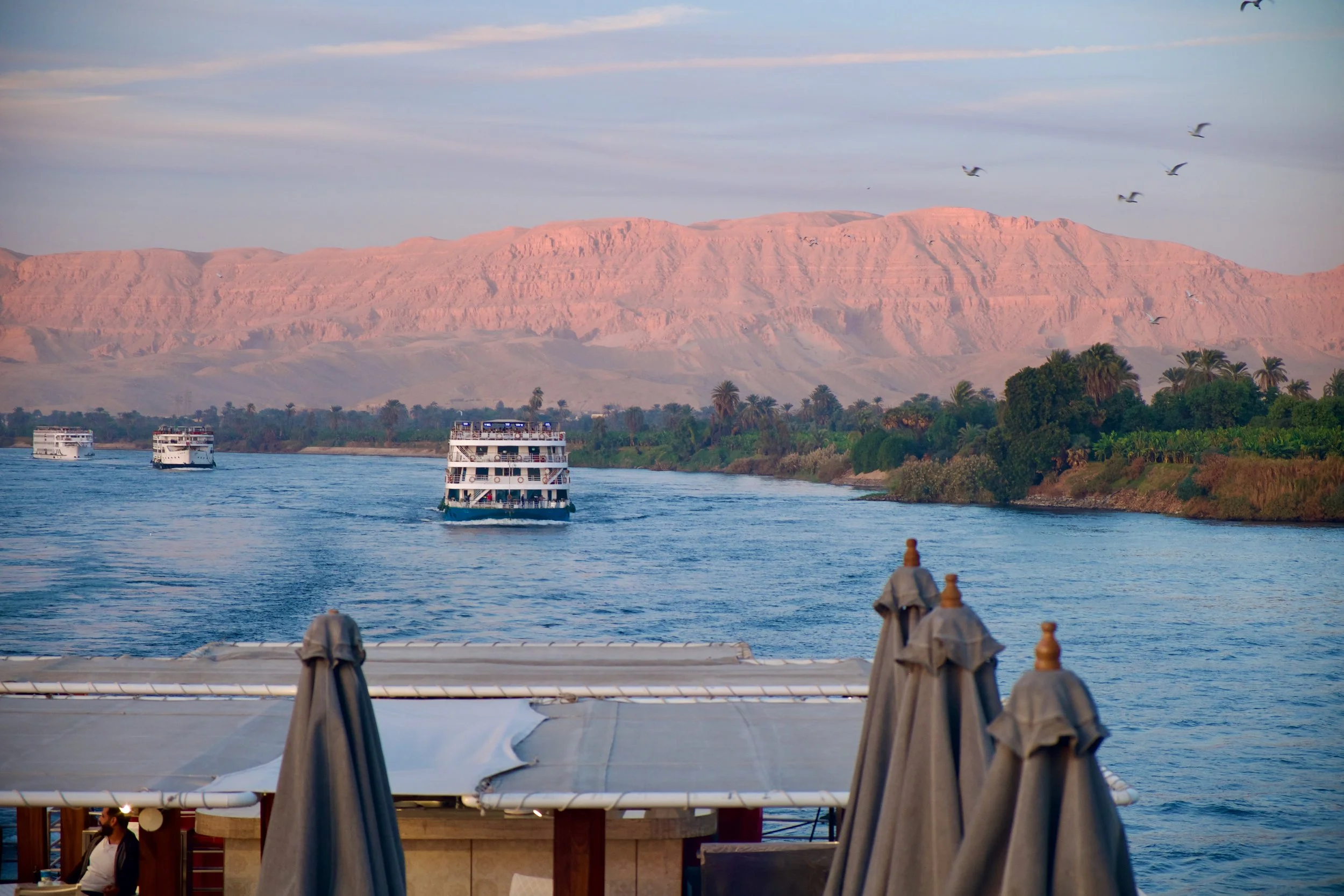
A Nile cruise sounds like a single thing. It is not.
The phrase covers everything from large ships sleeping several hundred passengers, with full entertainment programming and buffet dining, through to small wooden vessels carrying fewer than twenty guests and run on something closer to private-yacht logic. The river is the same. The experience is not.
Boat selection is, in our view, the single most consequential decision in shaping a Nile journey. More than route — most cruises follow the same Luxor-to-Aswan corridor with minor variations — and more than itinerary timing. The vessel is where guests spend roughly half their waking hours.
What changes with smaller boats
Three things, principally.
The first is acoustic. On larger ships, communal areas have the steady background hum of a small floating town — children, music, public address announcements, a mix of nationalities and languages overlapping at all times. On a boutique vessel, that quiet is restored. The river itself becomes audible. Crew know guests by name within hours rather than days.
The second is service style. With twelve to twenty guests rather than two hundred, the cadence of hospitality shifts from procedural to attentive. A waiter who already knows your morning coffee preference by day three is a different relationship from one who reintroduces themselves at every meal.
The third is pacing. Boutique itineraries tend to allow more flex — slightly later starts, slightly more relaxed excursions, the option of skipping a site that does not interest you without disrupting an entire ship's schedule. Most travellers do not realise how much they value this until they have it.
What boutique vessels are not
It is worth setting expectations. Smaller boats are not floating five-star hotels. Cabins, while typically generously proportioned by river-cruise standards, are not the size of a city hotel suite. Public spaces are intimate rather than expansive. There is no theatre, no casino, no spa programme to speak of. The pleasure on offer is restraint.
For travellers expecting cruise-style abundance, this can register at first as absence. Most adjust quickly, and many find by mid-voyage that the simplicity is what they had wanted all along.
The Boutique model
One stand-out example of this category of Nile cruises is the Tia Boutique. It is a small vessel with the cadence we look for in a Nile programme: a low passenger count, a confident kitchen, a calm and attentive crew, and an itinerary that allows site visits to register without becoming a procession.
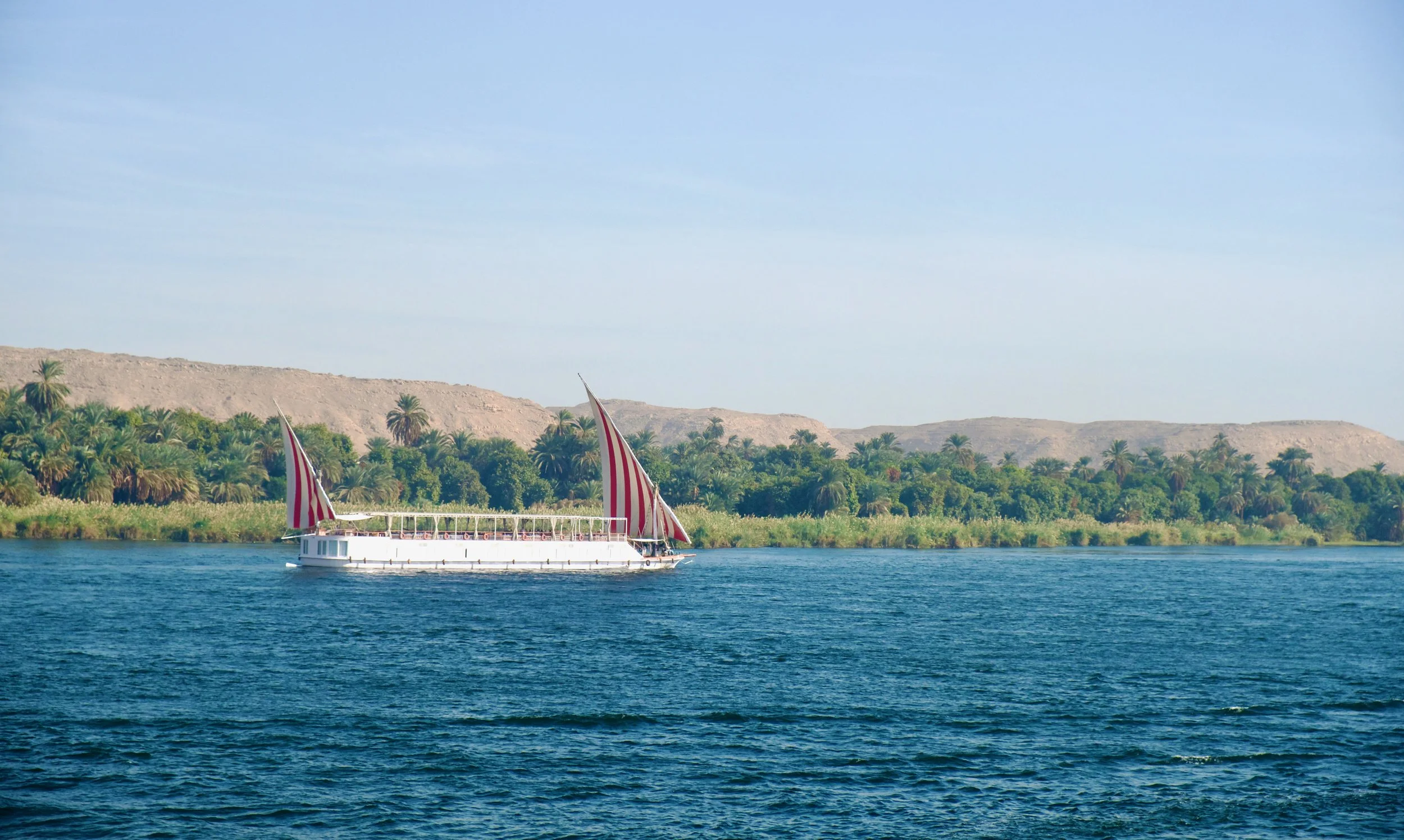
A dahabeya between Luxor and Aswan. At its most intimate, Nile travel looks nothing like a cruise.
It suits travellers who place a high value on quiet, who are comfortable with intimate communal spaces, and who would rather have a conversation with the captain than a dance floor. It suits couples, considered families, and small private groups. It does not suit travellers who specifically want the social density and onboard programming of a larger ship.
Where larger ships make sense
It is worth saying clearly: larger ships are not the wrong choice for everyone.
Travellers who enjoy meeting fellow passengers, who appreciate the structure of organised entertainment, or who travel in larger multi-generational groups often find that a major-line vessel works well. The trade-offs run in both directions, and the right boat depends genuinely on the temperament of the traveller.
Food, on every category of vessel
A common concern, and one usually overstated. Food quality on the better vessels — boutique and large alike — is generally strong, and most travellers find dining anxieties dissolve within the first day. Sensible precautions remain advisable. A persistent fear of illness, however, is rarely justified by the lived experience.
Cabins, sound, and the variables that matter day to day
Two practical notes. Lower cabins on any vessel sit closer to engine noise; upper cabins are quieter and command better views. And Nile cruise ships often dock alongside one another in port, which means windows occasionally face an adjacent ship rather than the river. These are not deal-breakers, but they are the kind of details worth confirming before committing to a category.
How much the boat shapes the trip
By the end of a four-night sailing, most travellers describe the boat itself as one of the defining elements of the trip — sometimes more memorable than individual sites along the way. A well-chosen vessel allows the river to do its quiet work. A less suitable one introduces a friction that no temple, however magnificent, can entirely undo.
For ALTEZA travellers, the answer is usually a smaller boat, run with care. The Nile rewards that scale.
Vessel selection on the Nile is consequential enough that we generally recommend deciding the boat before fixing other elements of the trip. We are happy to advise on the strongest current options across formats.