A Long Weekend in Tirana
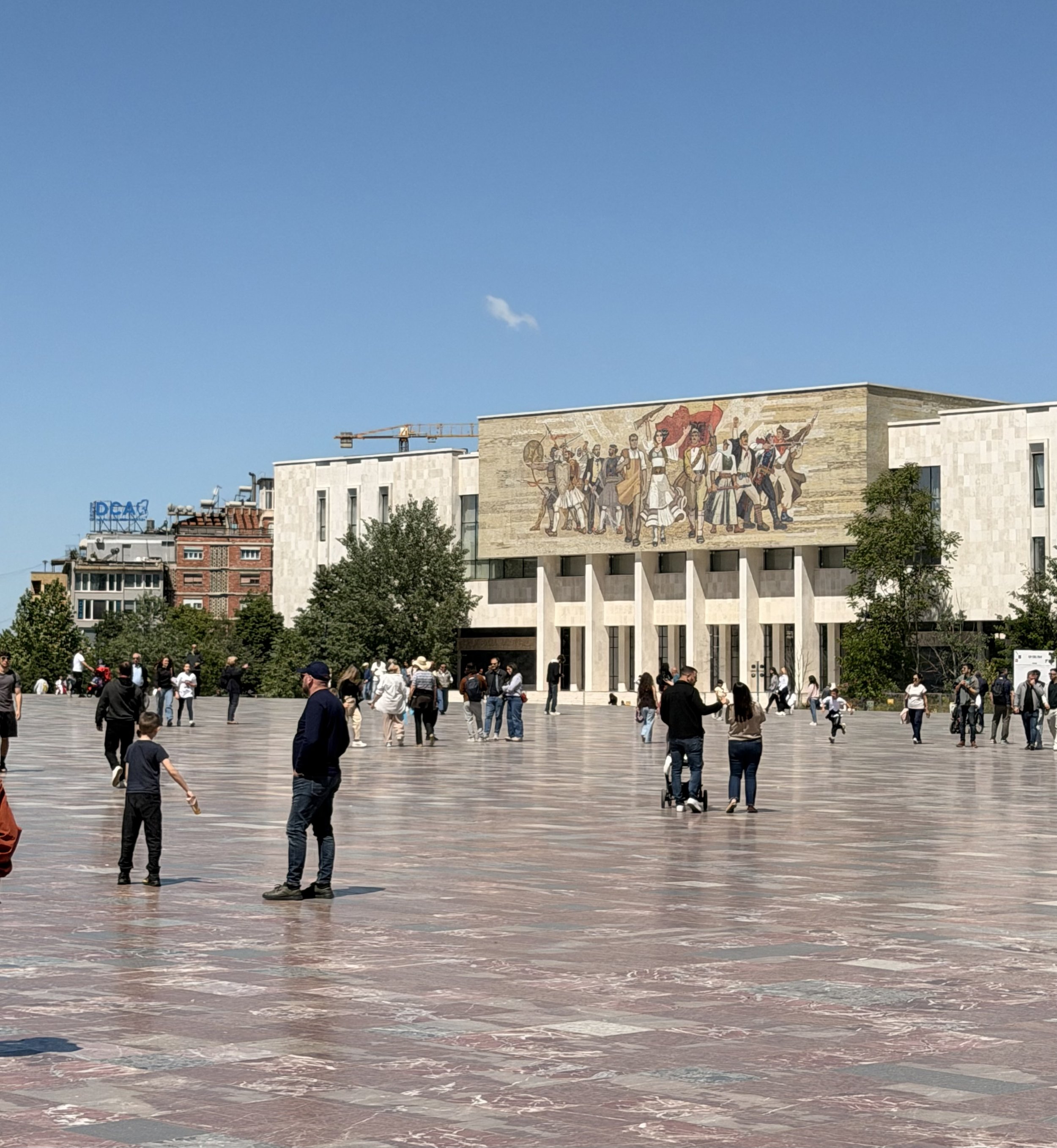
Skanderbeg Square, Tirana
Three nights, no further afield. That was the question Tirana was being asked: how does Albania's capital hold up as a city break, on a single bank holiday weekend, before the Riviera or the mountains enter the equation?
The answer turns out to be: better than its reputation, and in a register most travel writing about the city misses. Tirana is not, principally, an architecture city. It is not, principally, a museum city. It is a city of public hospitality and an absurd density of coffee shops — and once that fact lands, almost everything else about the place begins to make sense.
Coffee, hospitality, and how Tirana actually works
The first thing a visitor registers in Tirana is how much of life happens in front of a small cup.
Coffee shops are highly visible throughout the city — not the standardised café-chain version of everywhere, but a deeper one, where every block has three or four independently run espresso bars, all reasonably full at most hours of the day. The model is more Italian than central European: short, strong, sat down rather than carried out, frequently social. People meet for coffee the way people meet for drinks elsewhere, and the daily rhythm is structured around it.
Tied to this, more than to anything else, is what the trip will be remembered for: the hospitality of the people. The warmth is unforced and genuinely characteristic, not a tourism overlay. Conversations begin easily. Recommendations come unprompted. Restaurants treat first-time guests as if they will be back. There is a confidence in welcome here that more polished European capitals have, in places, traded away.
For travellers used to navigating European cities through a slight scrim of formality, the difference is striking. Tirana lets people in.
Blloku, and what to do with it
Blloku is the neighbourhood every visitor ends up in repeatedly, and there is a reason.
The district was, under communism, the closed enclave reserved for party leadership — geographically central, walkably small, and entirely inaccessible to ordinary Albanians. Since the early 1990s it has reinvented itself, and is now the city's densest concentration of design-led restaurants, bars, cafés, and the slightly dressed-up evening crowd. It works equally well in the morning for a coffee, in the afternoon for a long lunch, and well into the evening for cocktails.
Radio Bar is the standout for an evening. The atmosphere is design-conscious without being self-conscious — a vintage radio collection lining the walls, careful drink-making, the right music at the right volume. It is the kind of bar that would do well in any European capital and somehow does better here, because the price-to-quality calculation is so unusual.
A small set of things genuinely worth seeing
Tirana is not a city that requires a museum-heavy itinerary, but a few sites carry real weight.
Bunk'Art 1 sits on the city's northern edge, at the foot of Mount Dajti, in a former Cold War bunker complex built for Albania's communist leadership. The scale alone is striking — over a hundred rooms underground, presented across history and contemporary art exhibitions. Several hours easily disappear here, and it is one of the most interesting museum experiences anywhere in the Balkans.
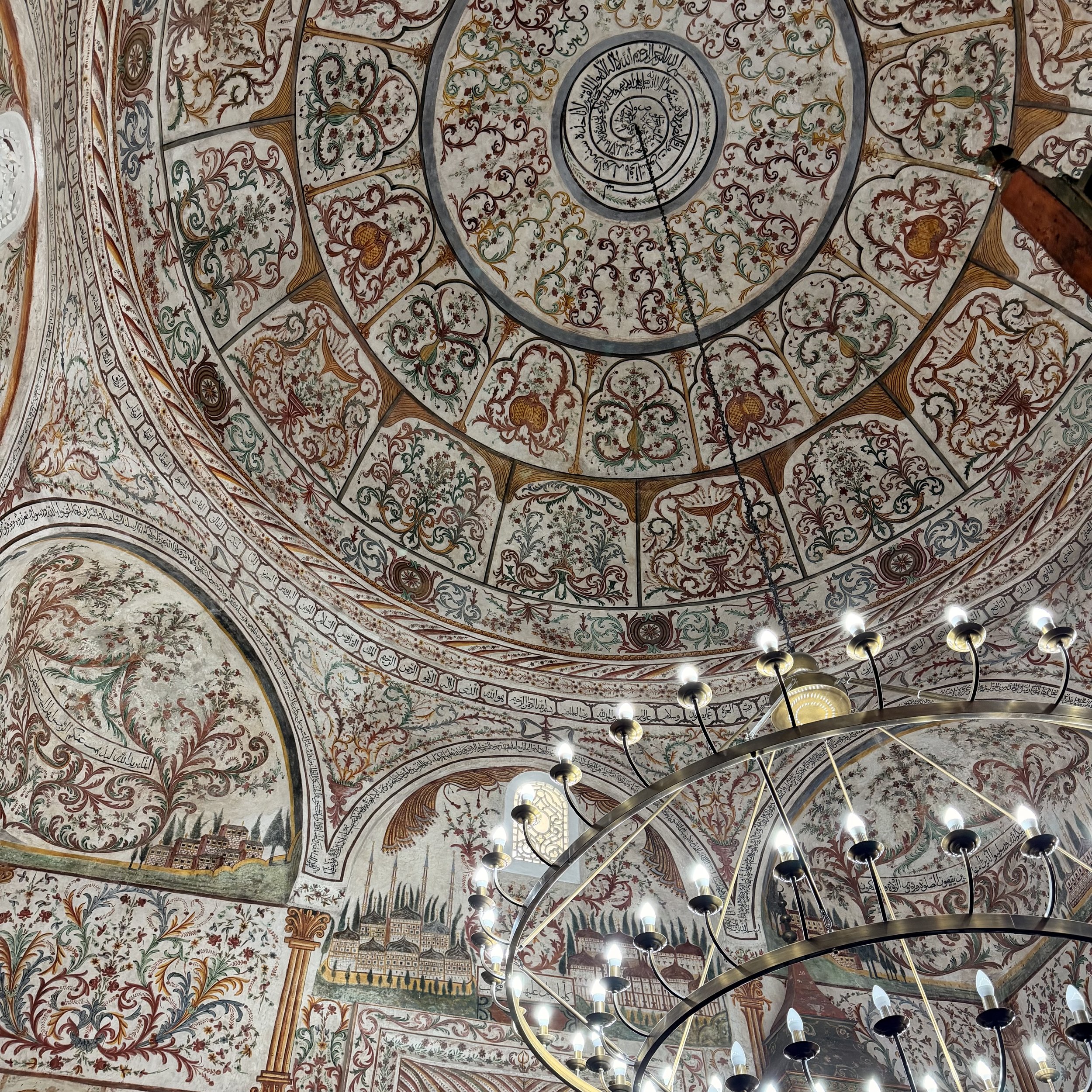
The Et'hem Bey Mosque on Skanderbeg Square is small, beautifully restored, and one of the loveliest interior spaces in the city. The square it sits on — vast, flat, recently redesigned — anchors the city's sense of itself.
The Dajti Express cable car, climbing from the eastern edge of Tirana up Mount Dajti, takes about fifteen minutes and lifts the whole city into context. The view at the top spans the entire valley and, on a clear day, considerable distance beyond.
A meal at the redeveloped Tirana Castle area is worth one of the three evenings. Shemendere, inside the restored fortress walls, was the dining standout — well worth seeking out, and one of the more atmospheric dinners the city offers.
On the ground
A short note on the practical layer.
Ride-hailing in Tirana does not run on the standard European apps — Uber, Bolt, and FreeNow do not operate. The local equivalent is Pakoto, which works well, takes card payments, and arrives reliably. Visitors who arrive expecting Bolt or Uber will spend their first hour confused; visitors who download Pakoto in advance will not.
The euro is widely accepted alongside the Albanian lek, which removes most of the friction of currency conversion. Smaller establishments still prefer lek, so a small float is worth carrying.
Tirana's hotel landscape is the part of the city that has not yet caught up to the rest. The boutique scene is developing rather than developed, and the international five-star format is largely absent. We can advise on the strongest current options for a long-weekend stay; expectations should be calibrated more toward European city-break hospitality than toward the design-led hotels of comparable European capitals.
The airport — Tirana International, Mother Teresa — is functional on arrival and notably less so on departure. Build extra time into the morning of your flight home. We arrange airport assistance for clients where it is helpful.
Who Tirana is for
Travellers drawn to cities that reveal themselves through atmosphere rather than monument. Curious, historically-aware visitors who enjoy a coffee culture and good bars more than a punch-list of sights. Travellers comfortable with a destination that is still actively becoming itself, rather than one in its final form.
It is less suited to those who want established luxury hotel infrastructure, or to travellers who plan a weekend through a museum guidebook.
For travellers who fit the first profile, Tirana over a long weekend lands as one of the most quietly enjoyable European city stays available. It is also, for now, one of the few European capitals where the experience genuinely feels off-trend rather than packaged for visitors.
Tirana suits a particular kind of city-break traveller — design-aware, curious, comfortable with destinations still in transition. We are happy to discuss whether the city fits your interests, and to advise on routing, hotel selection, and timing.