The Case for Long-Haul Ocean Cruising
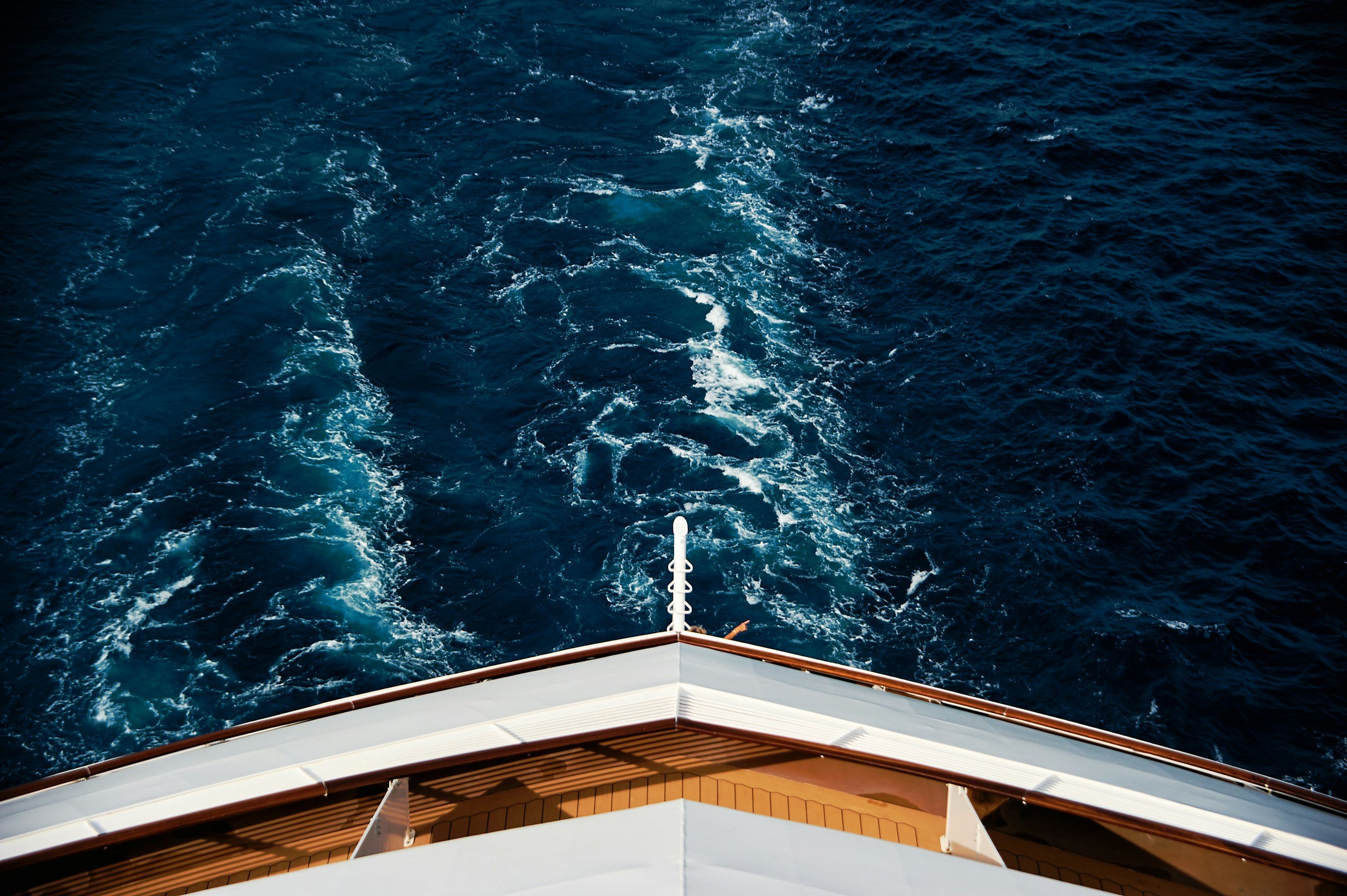
Cruising occupies a strangely fixed place in the travel imagination.
For some, the format is associated with regimented schedules and large ships engineered for mass-market efficiency. For others, the cliché is demographic: a holiday designed primarily for pensioners. Neither captures what an extended ocean voyage on a well-considered ship actually feels like, and the gap between the assumption and the reality is wider than almost any other category in modern travel.
This is a piece about long-haul ocean cruising specifically. By long-haul, we mean voyages of two weeks or more. The argument that follows does not hold for three-night Caribbean loops. It holds remarkably well for transatlantic crossings, segment-long world cruise legs, repositioning routes, and the longer expeditionary itineraries that are increasingly available.
What changes after the second week
The first week of any cruise feels like a holiday. The second week is when the voyage starts to function as something else.
The shift is mostly psychological. Around day eight to ten, the rhythm of the ship — meal times, the cadence of sea and port days, the staff who recognise you, the seat in the lounge that has become yours — begins to register as routine rather than novelty. The decision-making demands of land travel disappear. There is no luggage to repack, no transfers to arrange, no daily question of where to eat. The mental quiet this produces is, for many travellers, the genuine luxury.
The format suits travellers who have been busy for a long time, and need the kind of decompression that two-week beach holidays do not actually deliver. It suits couples and remote workers. It suits people in transition — between jobs, between projects, between phases of life — who need substantial calendar space and no logistical noise.
It also suits, with adjustment, travellers who have never considered cruising and assume it would not work for them. The longer the voyage, the more often this becomes the case.
The social dimension is the most underestimated variable
What surprises most first-time long-haul cruisers is the social texture.
On a two-week or three-week voyage, the same couple sees the same other couples in the same dining rooms night after night. Conversations that begin politely on day three develop substance by day eight, and become genuine by day fourteen. People who would not, on land, find themselves in extended company together discover that ships are remarkably good at producing it.
This is not for everyone. Travellers who specifically want anonymity, or who find sustained social interaction draining, will need to plan around it — usually by choosing a slightly larger ship where it is easier to disappear, or by selecting a cabin category with private outdoor space. Travellers who do enjoy the social density often describe it as the most unexpected pleasure of the format. Many remain in touch with people met on a cruise for years afterwards.
Sea days are the case for the format, not against it
The most common pre-cruise concern is sea days. The most common post-cruise reflection is that they were the best part.
A sea day is a day with no logistical demand. No transfer, no excursion, no checklist. Time stretches. Reading happens. So does sleep, and conversation, and the kind of unstructured thought that contracted urban schedules tend to crowd out. Modern ships offer enough optional programming that boredom is genuinely a choice rather than a default. Most travellers, after a few days, find they choose less of it.
For travellers used to optimising every hour of a holiday, the absence of optimisation pressure is jarring at first. By the end of the second week, almost no one wants it back.
What the ship needs to be
The format only works if the vessel does. Long-haul cruising on the wrong ship — too crowded, too programmed, too commercial — produces precisely the experience of the cruising stereotype.
The ships that reward extended voyages tend to share a few characteristics. Lower passenger counts, even within the larger lines. Genuinely high-quality dining, since food is consumed at a higher rate than on land trips. Strong service training, since crew–guest relationships meaningfully shape the experience over twenty days. Cabin proportions that allow a real sense of dwelling rather than transient occupation. And programming that errs toward enrichment — guest lecturers, music, well-curated excursions — rather than nightly variety shows.
Selection matters. The same itinerary on two different ships is, in practice, two different journeys.
Who long-haul cruising suits
Couples in their working prime who need decompression that meaningfully resets their nervous systems. Remote-working professionals with the autonomy to redirect a few weeks of life onto a ship. Travellers between phases. Travellers recovering from the kind of sustained intensity that a fortnight on a beach does not address.
Multi-generational groups, once thought less suited to cruising, have increasingly become a strong fit on the right vessels — the format produces meaningful shared time without forcing constant joint logistics.
It does not suit travellers who specifically want the sensory novelty of moving through unfamiliar terrain every day. It does not suit those who shy away from even mild social engagement. It does not suit anyone unwilling to surrender a degree of control over their daily structure in exchange for the rest that surrender produces.
The case in one line
Long-haul ocean cruising is not, principally, about the ports. It is about the time. Weeks-long voyages produce a quality of rest that few other travel formats deliver, and for the right travellers on the right ships, they remain one of the most quietly transformative experiences in modern travel.
It is, on those terms, deeply underrated.
For those willing to embrace its rhythm, it remains one of travel’s most underrated experiences.
Cruising is a travel format where ship selection, itinerary design, and pacing fundamentally shape the experience. ALTEZA provides tailored advisory and voyage planning services for cruises and journeys worldwide.